Understanding Structural Steel
Structural steel is often treated as a commodity—widely available, standardized, and seemingly interchangeable. Yet for manufacturers that depend on consistent performance in forming, welding, and fabrication, structural steel is rarely as simple as it appears.
The challenge is not whether the material meets specification. The challenge is whether it performs consistently every time.
As Kirk Erven, Technical Services Manager at Worthington Steel, explains, that distinction separates steel that merely meets requirements on paper from steel that delivers reliable results in production and in the field.
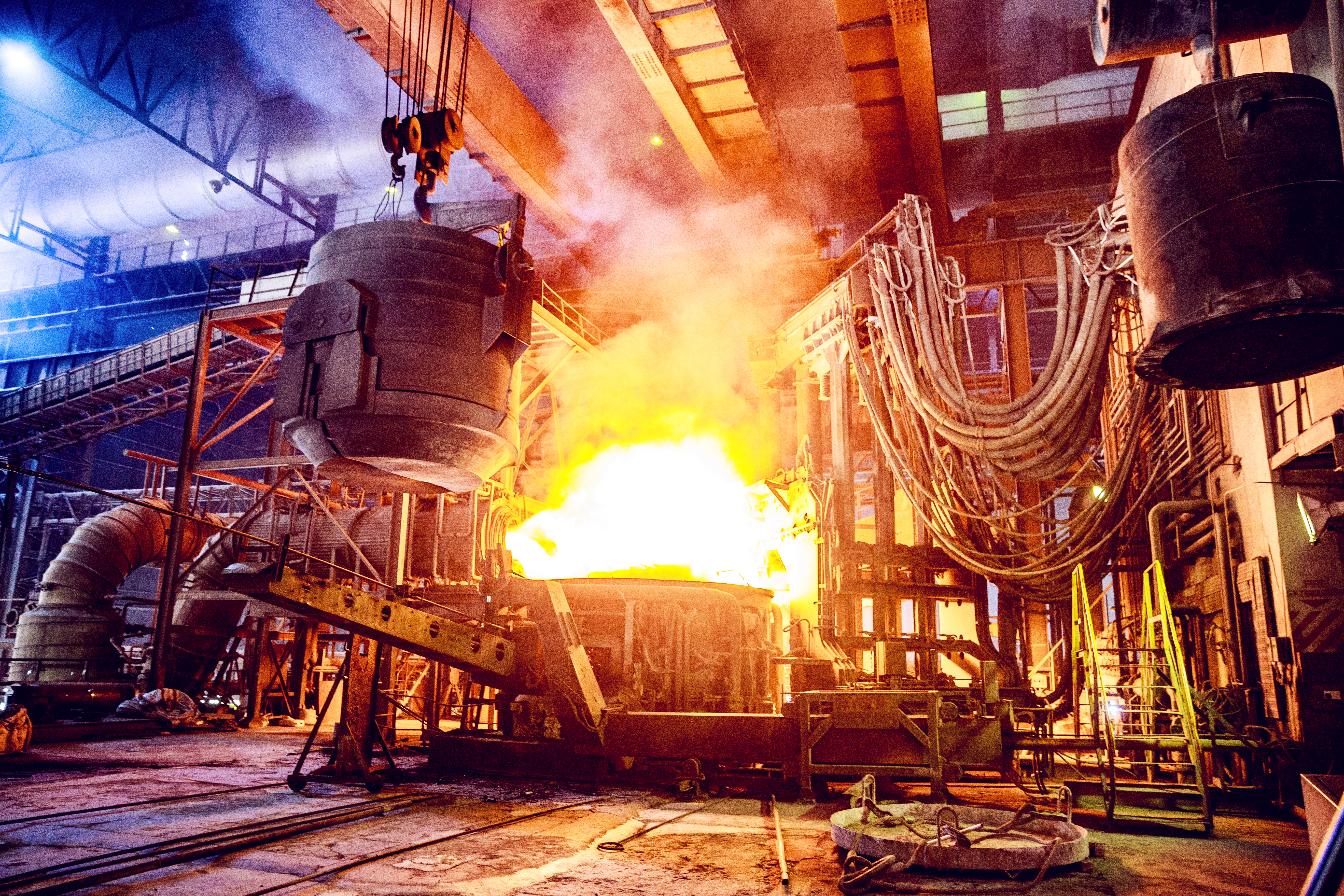
.jpg?sfvrsn=69e9b9a_1 "Annealing Furnace")
This article will walk you through the following:
What Is Structural Steel?
At its core, structural steel refers to steel specifically designed for load-bearing applications. Unlike standard plain carbon steels that are primarily defined by chemistry, structural steels are largely driven by mechanical property requirements, including yield strength, ductility, toughness, and structural integrity under load.
This category of steel is engineered to support heavy loads, absorb stress, resist impact, and maintain structural performance under demanding conditions.
Common grades include 33, 40, 50, and 55, with the numbers representing minimum yield strength in KSI.
While large-scale structures are the most visible examples, structural steel is also heavily used in component-driven applications. Worthington Steel regularly supports the production of floor decking, solar racking, agricultural equipment, and structural components for industrial applications where load-bearing performance and durability are critical.
Why Structural Steel Is Used So Widely?
Structural steel remains a core material across many industries because it offers a practical balance between performance, formability, weldability, toughness, and cost.
Compared to HSLA steels, structural grades often provide a more economical solution while still delivering guaranteed mechanical properties. Compared to plain carbon steels, they provide more defined strength requirements and more predictable structural performance.
| Material Types | General Characteristics | Typical Tradeoff |
|---|---|---|
| Plain Carbon Steel | Primarily specified by chemistry with limited mechanical property requirements. | Lowest cost, least performance control |
| Structural Steel | Mechanical property-driven steel with defined minimum strength requirements. | Balance of cost, strength, and formability |
| HSLA Steel | Enhanced strength and consistency through tighter chemistry and processing control. | Higher performance and consistency at a higher cost |
Impact resistance is also an important consideration in many structural applications, particularly where materials may experience repeated loading, environmental exposure, or dynamic stresses in the field.
From a production standpoint, these grades are not considered highly difficult to manufacture. As Norm Bettedpur, Technical Services Manager, noted, "mills have got the practice down for structural grades," allowing them to be produced efficiently and at scale.
That accessibility is one reason structural steel is often viewed as a commodity product.
However, the tradeoff for that flexibility is that structural steel specifications often allow for a fairly wide range of acceptable mechanical properties. Two coils can technically meet the same grade requirement yet behave differently during downstream manufacturing.
Customers often choose structural steel over HSLA because it offers an effective balance of strength, formability, and cost. However, that balance can come with a wider range of allowable mechanical properties. Achieving more predictable performance may require either a higher-cost material, such as HSLA, or stronger technical oversight throughout sourcing and processing to help minimize variation while maintaining the cost advantages of structural steel.
That is where metallurgical expertise becomes critical.
Where Structural Steel Challenges Actually Exist
For many producers, the biggest challenge is not obtaining structural steel but ensuring the material performs consistently throughout manufacturing and in final application.
Without reliable performance, issues such as excess scrap, forming instability, weld variability, lower production efficiency, and reduced product reliability can become more frequent.
Even when steel meets the same grade specification, differences in chemistry, residual elements, rolling practices, and processing conditions can influence how the material behaves during forming, welding, and fabrication. As Erven and Bettedpur emphasized, customers often underestimate how much variation can exist within an acceptable specification range. Two coils may satisfy the same mechanical requirements yet behave differently enough to create production challenges.
Those differences often become visible during downstream processing. Issues related to forming behavior, edge conditions, weld consistency, surface quality, or dimensional control can frequently be traced back to variations that are not immediately obvious on a certification sheet.
Roll forming is one example where repeatability becomes especially important. Customers running continuous forming operations depend on material that behaves consistently, coil after coil. Small shifts in yield strength, elongation, or work hardening behavior can force repeated line adjustments, create dimensional variation, increase scrap, and reduce overall production efficiency.
Paul Pfeifer, Technical Services Manager, described the role of the technical team as helping to "ensure steel performs consistently to customer satisfaction." That responsibility goes far beyond simply sourcing steel to a specification."
That responsibility goes far beyond simply sourcing steel to a specification. It involves understanding the customer's application, manufacturing process, and performance expectations to ensure the material behaves as intended in real production environments.
Erven reinforced that this alignment is especially important early in the design process. If material behavior is not properly considered up front, downstream corrections can become significantly more expensive and difficult to implement later.
In structural steel applications, performance depends on the entire system working together, including sourcing strategy, material properties, processing controls, forming behavior, and final application requirements. When any one of those elements falls out of alignment, performance issues can follow.
How Worthington Steel Supports Structural Steel Buyers
In a market where structural steel is often viewed as a commodity, Worthington Steel takes a more integrated, application-focused approach. The goal is not simply to supply material, but to help ensure it performs reliably within each customer's manufacturing environment.
That process begins with technical expertise. Worthington Steel's Technical Services team combines deep experience in metallurgy, mill-side steel production, downstream processing, and end-use application performance to help bridge the gap between steel specifications and real-world manufacturing demands.
As Bettedpur explained, the team works to "bridge the gap between mills and customers," combining knowledge of how steel is produced with how it ultimately performs in the application.
Beyond technical support, production consistency plays a critical role in the performance of structural steel. Chemistry is only part of the equation. Maintaining controlled rolling conditions, annealing parameters, and processing standards throughout production is equally important to achieving reliable results.
As Erven noted, "We are making a specific product for a specific order for a specific customer." He further explained that production is guided by defined processing "recipes" tailored to the final application: "We know what we need to do to produce those final properties."
By working closely with both mills and customers, Worthington Steel helps identify and manage variability before it becomes a downstream manufacturing issue.
Supply chain flexibility is another important advantage. As Bettedpur noted, "having access to multiple sources through a single entity like Worthington Steel with strong mill partners can make a huge difference."
That access helps customers maintain continuity of supply while supporting dependable performance expectations across sourcing options.
In addition, Worthington Steel's value-added processing capabilities allow teams to further tailor material to specific application requirements, including tighter tolerances, coating solutions, surface characteristics, and forming performance. Testing, analysis, and metallurgical support help validate performance expectations before material reaches the customer's production line, reducing risk and supporting long-term reliability in the field.
The result is steel engineered not only to meet specifications, but to deliver predictable performance in demanding real-world applications. For customers, that means greater confidence that the material will perform as expected, from initial processing through final use in the field.
A Simple Material That Requires the Right Approach
Structural steel may not carry the same level of technical complexity as high carbon or specialty alloys, but its performance is no less critical.
What appears to be a straightforward material is heavily dependent on repeatable performance, application alignment, and processing control.
For customers, success comes from understanding that structural steel is not purely a commodity purchase. Achieving reliability requires the right material selection, the right processing controls, and the right technical support.
Just as importantly, involving a knowledgeable processor early in the design and sourcing process can help prevent downstream production challenges, costly rework, and time-consuming root cause investigations later on.
In structural applications, meeting the specification is only part of the equation. Long-term success depends on selecting material that not only meets requirements on paper but also performs reliably throughout manufacturing and in the field.
About Worthington Steel
Since 1955, Worthington Flat Roll Steel has been delivering top-quality service that enables our customers to do the same for themselves. Our steel processing capabilities serve a variety of markets, including automotive, heavy trucks, agriculture, energy, construction, and many others.
Our commitment to our customers' business goes far beyond supplying steel. We provide advanced material support, price risk management, supply chain solutions, and the highest level of customer service and collaboration.
If you are interested in learning more about us at Worthington Steel, want to view our capabilities, or have a question that we can help you answer, please explore our website or call us at 1.800.944.3733. We are here to be partners for your manufacturing goals.
With 70 years of experience, we have the resources to help you.