Understanding High Carbon Steel
High carbon and alloy strip steels have always played a critical role in demanding applications where durability is crucial. Today, however, they are also becoming more complex to source and process for reasons we will explore.
Shifting supply dynamics, fewer specialized producers, and evolving production methods have made this category more nuanced than ever. For customers, that means success depends not just on securing material, but on understanding how that material behaves, and who to partner with to get it right.
Dave Cummings, Senior Business Director, explained that because of their properties and field requirements, these high carbon grades should not be treated like commodities. "The material is highly engineered," he explained. "Our customers are making parts that can't fatigue... that need the strength."
This article will walk you through the following:
What Is High Carbon Steel?
High carbon steel typically refers to steel with a carbon content of approximately 0.25% and above. Common grades range from 1030 through 1095, where the last two digits represent the nominal carbon content (for example, 1050 contains roughly 0.50% carbon). These materials are often used alongside alloy steels, which include additional elements such as chromium, molybdenum, or nickel to enhance hardenability, strength, and wear performance.
Compared to low and medium carbon steels, high carbon and alloy materials offer greater strength, hardness, and wear resistance. However, what makes steel unique is not just its composition but its flexibility for varying applications. Due to the fundamental behavior of iron and carbon, these materials can be supplied in a condition that is soft enough to form and bend, then later processed to achieve significantly higher strength levels. This ability to transition from formable, where that is needed in the manufacturing process, to extremely durable for demanding applications is what makes high carbon steel so valuable.
Those properties make them essential for applications where holding shape under intense stress and maintaining performance over time is critical. Use cases can range from automotive safety components, such as parking pawls and other drive train components and fasteners, to knife stock, saw blades, springs, chains for off-highway equipment, and industrial equipment, such as conveyors.
From a technical perspective, the material's value comes from how it performs under stress.
As Mike Gertz, Technical Services Manager, explained, high carbon steels are often used in "High wear, high toughness applications, stuff that needs to be able to take a beating."
What Makes High Carbon Steel Unique?
What sets high carbon steel apart is not just its chemistry but how it is processed and ultimately used.
Unlike lower carbon steels, high carbon material is often processed further through heat treatment to achieve significantly higher strength and wear resistance. That mechanical property comes from the ability to heat the material and rapidly cool it, creating hardened microstructures that dramatically increase strength.
As Ben Reed, Senior Director of Technical Services, explained, "Because it has a higher carbon content, it can be processed to achieve a hardness or strength level that is much, much greater than what it started as."
In some cases, that strength can be several times higher than the starting material.
However, strength is not the only characteristic of this type of steel. As carbon content increases, the material becomes less formable and more sensitive to how it is handled.
"As you add carbon, the hardness or the strength increases," Ben noted, "but it makes it more difficult to bend or form."
Because of this balance, high carbon steel is not a one-size-fits-all solution. The right grade of high carbon steel must be carefully matched to the application and processed correctly to perform as intended.
Why Fewer Suppliers Participate in This Space?
While high carbon steel remains essential across key industries such as automotive, construction, industrial machinery, equipment, and aerospace, the number of suppliers actively producing it has decreased over time.
One reason is the inherent complexity of the material. High carbon grades are more difficult to produce consistently and place greater demands on mill operations. Unlike low carbon steels, production is not as simple as switching between grades. Mills must gradually build up and step down carbon content across heats, carefully sequencing production to maintain stability and avoid defects. This added complexity makes high carbon more disruptive to standard operations and harder on equipment.
Gertz explained that producing these materials involves "a lot of issues that can arise, that can be difficult to maintain and ensure you don't have bad products coming out," highlighting the level of control required throughout the process.
At the same time, the market itself is relatively specialized. Even though the applications are critical, the overall volume is lower compared to other use cases that rely on commodity steel products. That creates a challenging balance for producers.
"There isn't enough volume to open up a steel mill and just do high carbon and alloy," Reed said. "It needs to be part of what they do."
Operational realities also play a role. For economic reasons, mills often prioritize higher-volume, predictable products, especially when demand is strong and tied to common applications. Tracy Marcarello, Senior Purchasing Manager, further explained this, detailing that mills are constantly balancing capacity and product mix, which can make it more challenging to dedicate time and resources to more complex grades like high carbon.
Over time, these factors, combined with broader industry consolidation, have reduced the number of facilities participating in this space, making sourcing different and more complex.
What Customers Should Know When Sourcing High Carbon Steel Today
As the market evolves, sourcing high carbon steel requires a different approach than it did in the past.
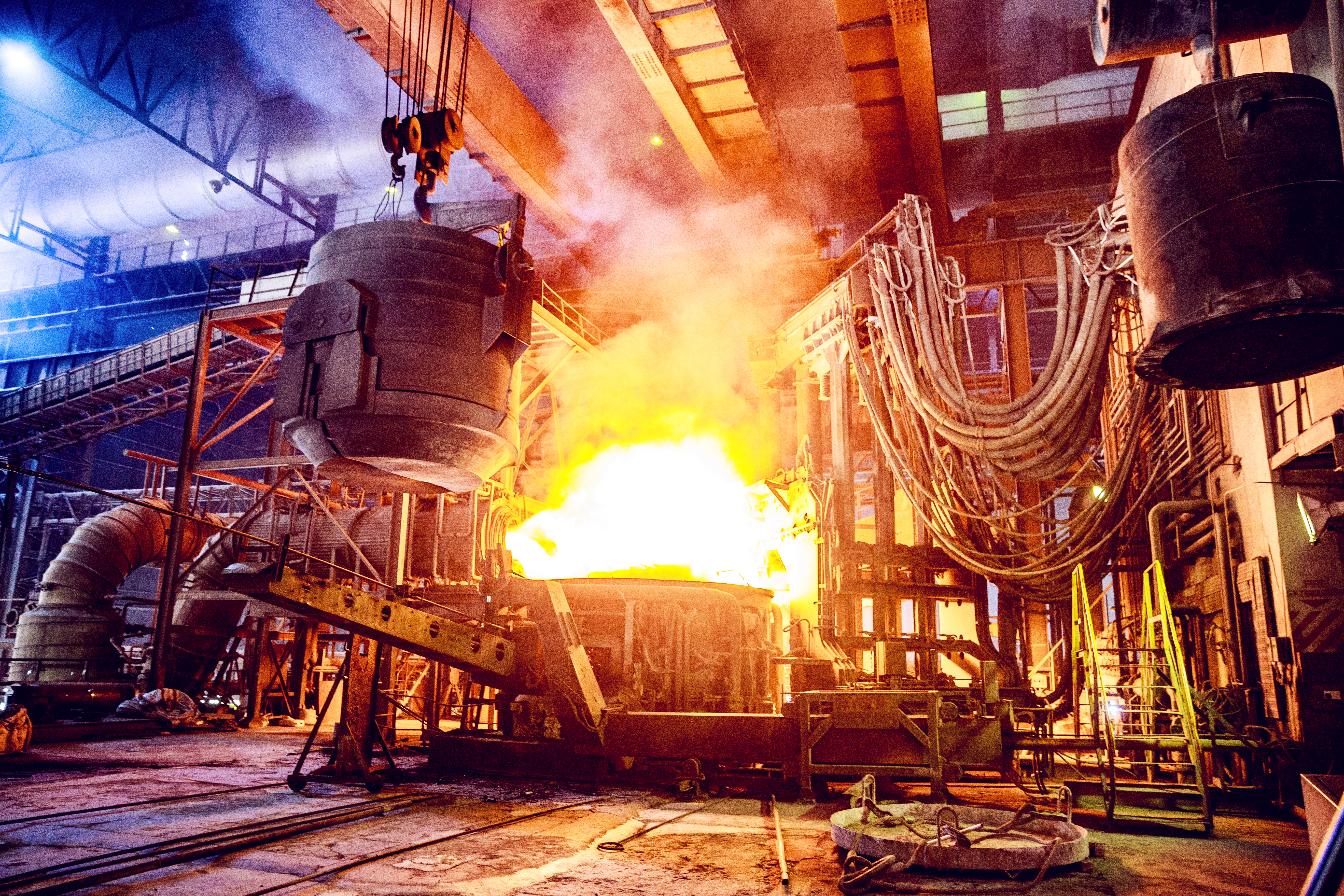
One of the biggest shifts is the growing presence of electric arc furnace (EAF) steelmaking compared to traditional integrated mills. EAFs primarily use recycled scrap as their input, which can introduce higher levels of residual elements such as copper (Cu), tin (Sn), nickel (Ni), chromium (Cr), molybdenum (Mo), and nitrogen (N). While these materials are still suitable for many applications, they can create variability in how the steel behaves during downstream processing. As a result, achieving consistent performance requires a deeper understanding of both the material and how it will be processed.
This shift makes it increasingly important to work with a partner who understands how to adapt. Rather than relying on a single, consistent source, today's supply landscape requires collaboration across suppliers, processors, and customers to ensure the material performs as intended.
Supply is also often less flexible than it has been historically. Minimum order quantities can be larger, and not all grades are readily available from multiple sources.
Cummings noted, "You can't just buy a truckload, you've got to buy two heats," reflecting the realities of mill production and the need to balance that with end-customer needs.
At the same time, substitutions are not always straightforward. While alternatives may exist, they often require careful engineering review and coordination across multiple stakeholders to ensure them material achieves the same performance.
Gertz explained, making a change "can create quite a discussion path between stamper, customer, and supplier."
These high carbon and alloy steels often require thorough testing to ensure it will harden correctly in subsequent manufacturing processes, such as heat treating.
Even when material is available, it may not behave exactly the same as previous sources. Differences in chemistry and production methods, particularly between EAF and integrated steelmaking, can influence everything from surface quality to heat treatment response. With Worthington Steel's depth of experience, we have learned over time what to watch for.
Reed emphasized, success depends on understanding the full system: "It's not one or the other. It's a system working together."
Because of this, processing expertise becomes just as important as sourcing. High carbon steel performance depends heavily on how it is rolled, annealed, and prepared before it ever reaches the end application. Success in this space often comes down to working closely with both mills and customers, Marcarello noted, to align material, processing, and performance requirements from the start.
How Worthington Steel Supports Customers in This Space
In a more complex and constrained market, the role of a flat roll steel processor becomes more critical.
Worthington Steel brings together technical expertise, processing capabilities, and supply chain strength to help customers navigate this environment. The company has decades of experience working with high carbon and alloy strip steels, along with a deep understanding of both mill-side production and downstream application requirements.
That experience matters. "We have over 400 years of industry experience on our team," Reed noted. That knowledge spans the full lifecycle of steel, from how it is made at the mill to how it is processed to how it ultimately performs in the end application, allowing teams to anticipate challenges and guide customers through them.
Processing is also a key differentiator. High carbon steel often requires multiple stages of cold rolling and annealing to achieve the right combination of thickness, strength, and formability. Rather than following a single standard path, these materials are handled through carefully designed sequences.
Reed described the process as being "less around a standardized [approach], and more of a highly engineered sequence to get to the desired final properties."
On the supply side, Worthington Steel works closely with a network of qualified mills and continues to develop new sources as the market evolves. Building and maintaining those relationships is critical in a space where availability can be limited. Establishing both primary and secondary supply options helps reduce risk, improve continuity, and ensure customers are not dependent on a single source in a constrained market.
"I want to have primary and a secondary [source], that's really hard to do," Marcarello explained as she highlighted both the importance and the challenge of building redundancy into the supply chain.
Ultimately, Worthington Steel's role goes beyond supplying material. The focus is on ensuring performance across the entire system, from sourcing and processing to the customer's end application.
"We're not just out to meet the spec," Reed said. "We're out to deliver a solution that works with the whole system."
A Changing Market Required a Different Approach
High carbon and alloy strip steels are not going away, but the way they are sourced and processed is changing.
In today's environment, success depends on understanding not only the material itself, but also the broader system that supports it. That includes how it is produced, how it is processed, and how it performs in real-world applications.
For customers, that means working with a partner who can help navigate that complexity, combining technical knowledge, processing expertise, and supply chain insight to deliver reliable results.
Key considerations for customers sourcing high carbon steel today:
- Supply is more constrained: fewer mills and larger order requirements impact availability
- Material behavior can vary: differences in production methods (EAF vs. integrated) affect performance
- Processing is critical: rolling, annealing, and preparation directly influence end-use success
- Substitution requires collaboration: changes often involve coordination across multiple stakeholders
- Supply chain redundancy matters: having multiple qualified sources reduces risk and improves continuity
- Technical partnership is essential: expertise across the full system ensures consistent, reliable outcomes
Having considered all that, it may sound overwhelming, but it is what we at Worthington Steel do every day. Let us team up with you on the steel challenges you face.
About Worthington Steel
Since 1955, Worthington Flat Roll Steel has been delivering top-quality service that enables our customers to do the same for themselves. Our steel processing capabilities serve a variety of markets, including automotive, heavy trucks, agriculture, energy, construction, and many others.
Our commitment to our customers' business goes far beyond supplying steel. We provide advanced material support, price risk management, supply chain solutions, and the highest level of customer service and collaboration.
If you are interested in learning more about us at Worthington Steel, want to view our capabilities, or have a question that we can help you answer, please explore our website or call us at 1.800.944.3733. We are here to be partners for your manufacturing goals.
With 70 years of experience, we have the resources to help you.